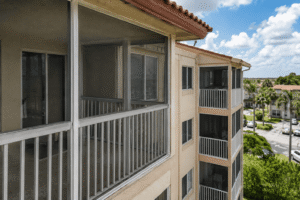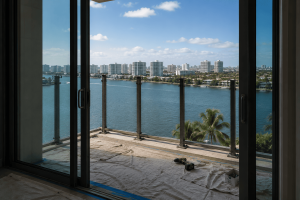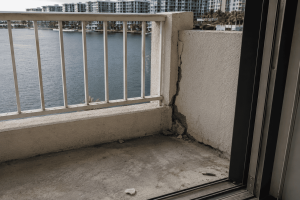
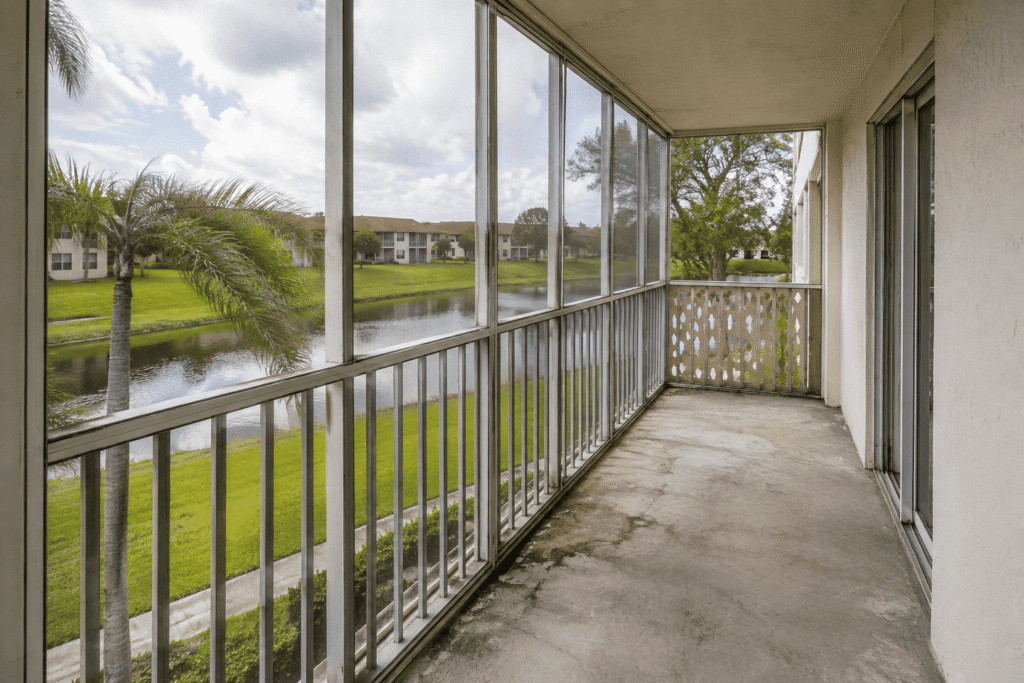
Screen enclosures are one of the most common shared amenities in South Florida condo and multifamily properties pool decks, terraces, shared balconies. They’re also one of the easiest to overlook, since deterioration often isn’t obvious until it’s already significant. For a board or property manager, the real question usually isn’t “what does the building code say” it’s whether the structure is still safe, whether it’s up to date, and when to plan for repair or replacement.
Why Screen Enclosures Need Regular Attention
Unlike a lot of common-area amenities, a screen enclosure is a structural system. It’s engineered to withstand specific wind loads based on where your property is located and how it’s built and in South Florida, especially in Miami-Dade and Broward’s High-Velocity Hurricane Zone, those requirements are among the strictest in the state. Properties elsewhere in Florida still have real requirements to meet, just calculated differently. What matters for a board: replacing or repairing an enclosure isn’t a simple like-for-like swap. It has to be engineered for your specific building and filed correctly with your county.
Signs Your Building’s Screen Enclosure May Need Attention
- Visible corrosion or rust on the aluminum framing or where posts meet the structure
- Mesh that’s torn, sagging, or brittle after years of sun and salt-air exposure
- Loose or corroded anchors at the base of posts
- An older enclosure with no engineering records or wind-load documentation on file
If any of these show up during routine maintenance or come up in a report, it’s worth having a professional take a closer look before it turns into a bigger, more expensive problem.
Repair or Replace? What Boards Should Weigh
Two things usually drive this decision: how extensive the damage is, and how the existing system compares to current standards. Isolated corrosion or a few loose anchors in an otherwise sound enclosure can often be addressed with targeted repair. Widespread corrosion, a system installed before current wind-load standards, or a history of repeated repairs are usually signs that replacement is the more cost-effective path over time. Every building is different, so this is worth confirming with a licensed engineer before your board commits to a direction.
What to Verify Before Approving a Screen Enclosure Project
- Engineered plans, signed and sealed by a licensed Florida engineer
- A permit filed correctly for your county requirements differ across Miami-Dade, Broward, and Palm Beach
- A contractor with real experience on condo and multifamily common-area projects, not just single-unit installs
- Written wind-load documentation kept on file for your board’s records
How Alenac Metals Helps Condo Boards and Property Managers
Alenac isn’t in the business of milestone inspections or engineering reports we pick up where those reports leave off. If a finding or a routine check raises questions about your screen enclosure’s condition, we coordinate with your board’s engineer, and handle the engineering coordination, manufacturing, and installation needed to bring the system up to standard. Because these projects cover a shared structure rather than a single unit, we plan and execute them at the building level one engineered system, one permitting process, one point of contact for your board.
Frequently Asked Questions
Do screen enclosures in Florida need to meet wind-load requirements?
Yes. Every permitted enclosure has to meet a wind-load rating based on the property’s location, and shared community structures often draw extra scrutiny since more than one unit is affected if something fails.
How often should a condo’s screen enclosures be reviewed?
There’s no single fixed rule for screen enclosures specifically. Many boards choose to review them as part of their building’s broader structural review process, or after a major storm. A licensed engineer can help confirm the right timing for your property.
What’s the difference between HVHZ and standard wind zone requirements?
Properties in Miami-Dade and Broward fall under Florida’s High-Velocity Hurricane Zone, which carries the strictest wind and impact standards in the state. Properties elsewhere still have substantial requirements, just calculated differently worth confirming which zone applies before comparing quotes.
How can Alenac help if our screen enclosure isn’t up to code?
We work with your board’s engineer and handle the engineering coordination, manufacturing, and installation needed to bring your enclosure into compliance.
Concerned About the Condition of Your Railings?
Whether your building is approaching a milestone inspection or you’re seeing signs of corrosion, movement, or recurring repairs, our team can help evaluate your railing system and recommend the most practical path forward.
Call us at (561) 877-4109 or email [email protected] to schedule a property assessment.