A railing replacement project looks straightforward on paper: remove the old system, install the new one, done. In practice, it’s one of the easiest capital projects for a condominium board to get wrong and the mistakes rarely show up until change orders start arriving, or until a code inspector flags something that has to be torn out and redone.
Below are the mistakes we see most often on South Florida condominium and multifamily projects, roughly ordered by how expensive they tend to get.
1. Choosing a Contractor Without Verified Product Approvals
This is the single most expensive mistake a board can make, and it’s entirely preventable. Railings installed in Florida’s high-velocity hurricane zones must meet documented wind-load requirements typically evidenced by a Miami-Dade County Notice of Acceptance (NOA) or a Florida Product Approval for the specific system being installed.
What it costs: If a system fails inspection or doesn’t hold the required approval, the association can be looking at a full removal and reinstallation with a compliant product essentially paying for the project twice, plus the delay costs of a failed inspection re-review.
How to avoid it: Request the specific NOA or Florida Product Approval number for the exact railing system proposed, not just a general statement that “our railings are code-compliant.” Verify it against the product, not just the manufacturer’s name.
2. Scoping the Railings Before the Structural Engineer’s Report Is Final
Boards under deadline pressure often tied to a milestone inspection or Structural Integrity Reserve Study (SIRS) finding sometimes rush to bid the railing replacement before the engineer has finalized the full scope of structural repairs required underneath.
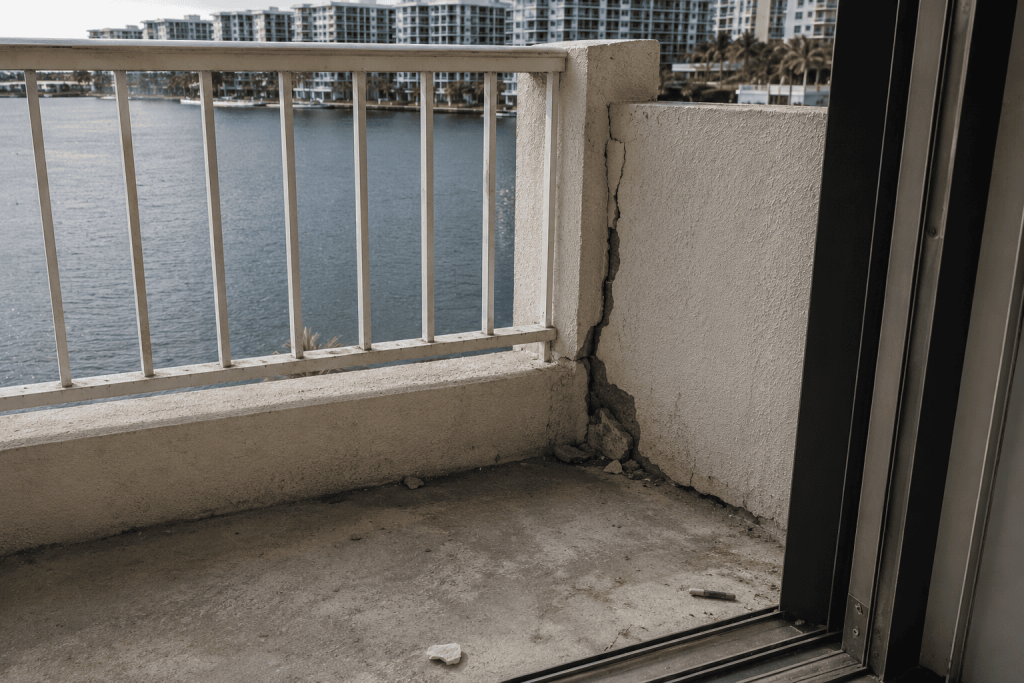
What it costs: If concrete restoration, rebar remediation, or waterproofing work is discovered after the railing contract is already signed, the railing installation often has to be delayed, resequenced, or partially redone around the structural work generating change orders and idle-crew costs that weren’t in the original budget.
How to avoid it: Get the full engineering scope finalized first. If timeline pressure makes that impossible, structure the railing contract with a clear contingency and change-order process tied explicitly to structural findings, not a fixed lump sum assuming a clean substrate.
3. Underestimating How Many Balcony Configurations Actually Exist
On paper, a building might look like it has one balcony type repeated on every floor. In reality, corner units, penthouse configurations, and older buildings with prior renovations often have several different balcony widths, post spacing requirements, or mounting conditions.
What it costs: A quote based on a single “typical” balcony, applied across the whole building, tends to balloon once field measurements reveal multiple configurations sometimes by tens of thousands of dollars on larger properties.
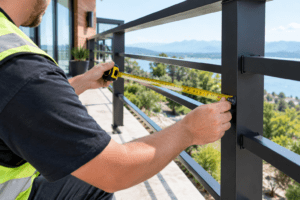
How to avoid it: Insist on a field survey and unit-by-unit measurement before final pricing, not a quote extrapolated from a handful of sample units.
4. Not Budgeting for Temporary Barriers and Access Equipment
Railing replacement requires removing the existing guardrail before the new one goes in, which means every open balcony needs a temporary, code-compliant barrier during that window. Scaffolding, swing-stage rigging, or lift access also needs to be planned and budgeted, not treated as a line item the contractor will “figure out.”
What it costs: When these costs aren’t in the original proposal, they show up as change orders mid-project at a point where the board has little leverage to negotiate, because work has already started.
How to avoid it: Confirm in writing, before signing, that temporary barriers and access equipment are included in the base contract price, not billed separately once discovered.
5. Skipping the Reserve Study / Milestone Inspection Coordination
Under Florida’s post-Surfside legislation, associations completing a milestone inspection may also be required to complete a Structural Integrity Reserve Study around the same timeline, and reserve funding rules for structural components have tightened significantly associations can no longer waive reserves for critical items identified in a SIRS. Boards that plan railing replacement in isolation from this broader capital planning process frequently end up under-reserved for the actual scope required.
What it costs: Underfunded reserves typically translate into a special assessment on unit owners the single most contentious outcome a board can hand to residents, and one that’s largely avoidable with earlier coordination.
How to avoid it: Loop your engineer, reserve study provider, and railing fabricator into the same planning conversation early, rather than sequentially. See our guide on planning a balcony renovation without disrupting residents for how to sequence this properly.
H2: 6. Choosing the Cheapest Bid Without Comparing Warranty Terms
Railing bids can vary significantly in price for reasons that aren’t obvious on the surface powder coat warranty length, structural warranty terms, and whether installation labor is warrantied separately from the materials.
What it costs: A lower bid with a short or unclear warranty can end up costing more over 10–15 years if coastal salt exposure causes premature coating failure that isn’t covered. Our post on railing maintenance and durability covers what realistic long-term performance should look like.
How to avoid it: Compare warranty terms line-by-line across bids, not just the bottom-line price. Ask specifically what’s covered for coastal/salt-air conditions, since standard inland warranties often carry exclusions near the ocean.
7. Not Confirming Who Owns Punch-List and Final Inspection Responsibility
On larger projects, it’s common for confusion to arise near the end about who is responsible for closing out permits, scheduling final inspections, and resolving punch-list items the contractor, the property manager, or the board directly.
What it costs: Delayed permit close-out can hold up certificates of occupancy or completion, which in turn can affect refinancing, insurance renewal, or unit sales for owners trying to close during that window.
How to avoid it: Put permit close-out and final inspection responsibility in writing as part of the original contract, with a defined timeline after substantial completion.
FAQ
What’s the single most expensive mistake boards make on railing projects? Hiring a contractor or specifying a product without verified wind-load product approvals for their specific jurisdiction. A failed inspection on this basis can mean a full removal and reinstall effectively doubling the project cost.
How can a board avoid scope creep on a railing replacement? Finalize the structural engineer’s scope before finalizing the railing contract, and require a field survey of actual balcony configurations rather than pricing off a single “typical” unit.
Are temporary barriers required during railing replacement? Yes. Any open balcony edge during construction needs a code-compliant temporary guardrail, and this should be a line item in the original contract, not a change order discovered mid-project.
Does railing replacement need to be coordinated with our milestone inspection or SIRS? In most cases, yes. Since balconies and railings fall within the scope of Florida’s milestone inspection and reserve study requirements, coordinating timing and budget with your engineer and reserve study provider helps avoid being under-reserved and facing a special assessment.
Planning a condominium railing replacement?
Our team can review your engineering scope, verify product approvals, evaluate balcony configurations, and identify potential issues before your project goes out to bid.
Call (561) 877-4109 or email [email protected] to schedule a consultation.