Every metal project eventually comes down to the same question: which process will turn the drawing into a finished part? Whether you need a waterjet cutting service, angle rolling, or metal forming, each one solves a different problem. Picking the right one early helps keep a project on schedule, and it also shows when it makes sense to bring in a fabrication partner.
Quick answer: Waterjet cutting is best for flat parts and patterns, angle rolling for curved angle, tube, and flat bar, and metal forming for bent plate and sheet components. Many projects use more than one.
What Each Process Does Best
Waterjet Cutting
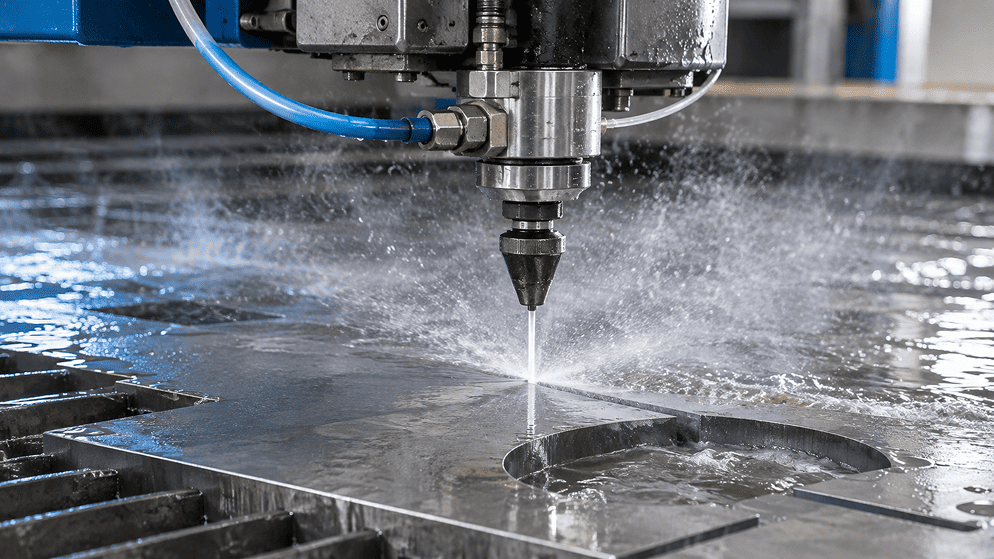
A waterjet cutting service uses a high-pressure stream of water, usually mixed with abrasive, to cut metal without heat. That makes it a good fit for decorative screens, privacy panels, patterned panels, base plates, and brackets in both aluminum and steel. It handles intricate shapes that are hard to cut by other means.
Angle Rolling
Angle rolling bends angle, tube, flat bar, and similar shapes into a curve. It is what makes curved and rolled handrail, radius posts, and arched frames possible, including on aluminum railing systems. Many shops don’t have the equipment in-house, so it is one of the most commonly outsourced processes.
Custom Metal Forming
Custom metal forming shapes plate, sheet, and profiles into the final geometry the design calls for. It often works together with cutting and welding rather than replacing them, and it is what turns flat material into frames, enclosures, and formed components.
Which Process Fits Which Part
| If your project needs… | Process to consider |
| Decorative screens, privacy panels, patterned panels | Waterjet cutting |
| Curved or rolled railings, handrails, and posts | Angle rolling |
| Brackets, base plates, and cut plate | Waterjet cutting |
| Frames, enclosures, and formed components | Metal forming |
| Repeat production runs of identical parts | Cutting, forming, and welding planned as one run |
Aluminum vs. Steel: What Changes in Fabrication
Both metals can go through waterjet cutting, forming, and welding, but they behave differently. Aluminum is lighter and naturally corrosion-resistant, which is why it is common in coastal projects; the finish matters too, as covered in Coastal Aluminum: Choosing the Right Finish for Salt Air & Humidity. Steel offers strength for structural and heavier components. The right choice depends on the load, the environment, and the finish. Your engineer or project team usually makes that call, and the fabricator builds to those specifications.
When It Makes Sense to Outsource a Process
Outsourcing a single process can be more practical than buying equipment you’d rarely use. It usually makes sense when:
- A job needs a process your shop doesn’t have, such as an angle roll or waterjet
- Your backlog doesn’t leave room for the project timeline
- A client needs a large production run
- You want one partner to handle cutting, forming, welding, and finishing instead of coordinating several vendors
For a closer look at when extra capacity helps, see Custom Metal Fabrication in South Florida: When to Bring in an Overflow Shop.
How Alenac Metals Supports Fabrication Partners
Alenac Metals fabricates to your drawings and specifications, with waterjet cutting, angle rolling, welding, and metal forming in aluminum and steel, all done in-house. The shop is set up for repeatable production runs, from railing sections to cut plate and brackets. Work can ship under your own name, so your client relationship stays yours. Send drawings, dimensions, quantities, and finish requirements, and the team typically responds with a quote in 24–48 hours. Learn more about our fabrication services.
Frequently Asked Questions
Can waterjet cut aluminum?
Yes. Waterjet cutting works on aluminum and steel, and because it doesn’t use heat, it suits detailed panels and patterned designs.
What is angle rolling?
Angle rolling is a process that bends angle, tube, and flat bar into curves. It is used for curved railings, handrails, and radius frames.
When should a shop outsource fabrication?
When a project needs a capability the shop doesn’t have, when the backlog is too full, or when a client needs a larger production run.
What does white-label fabrication mean?
The fabricator builds the part to your specifications and ships it without its own branding, so you can sell or install it under your name.
Need a Fabrication Partner for Your Next Project?
Whether you need waterjet-cut panels, rolled rail, or formed components, our team can review your drawings and get a quote back within 24–48 hours. Your client never hears our name.
Call us at (561) 877-4109 or email [email protected] to schedule a property assessment.