Aluminum louvers and sunshades often look similar, so they are easy to confuse. Both are architectural aluminum systems that shape how a building handles sun, heat, and airflow. For a condo board or property manager, knowing the difference makes it easier to tell what your building has, spot when it needs attention, and ask the right questions before a repair or replacement.
Quick answer: Louvers let air pass through while blocking direct sun and rain. Sunshades project from the building to block direct sun before it reaches windows or balconies.
Louvers vs. Sunshades: The Simple Difference
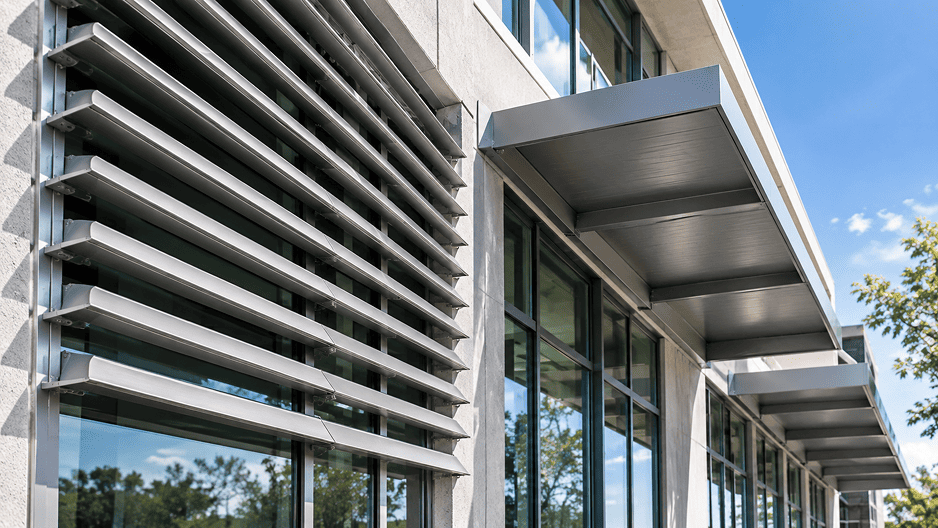
Aluminum louvers are slatted panels that let air pass through while blocking direct sun, rain, and sometimes the view. They are common on facades, mechanical areas, and ventilated enclosures. Louvers can be fixed or operable, and horizontal or vertical.
Sunshades are fins or blades that project from the building to block direct sun before it reaches windows or balconies. You may also hear them called brise soleil, the French term for “sun breaker.” They are mainly about sun control rather than ventilation.
In short: louvers manage air and light together, while sunshades focus on keeping the sun out.
Where Each One Is Used on a Building
- Windows and balconies: sunshades reduce direct sun exposure and heat gain
- Mechanical equipment areas: louvers and screening hide equipment while allowing airflow
- Building facades and common areas: both can add architectural character as well as performance
- Rooftop equipment: screening systems keep equipment out of view without blocking ventilation
Signs Your Louvers or Sunshades May Need Attention
- Corrosion, staining, or pitting on the aluminum
- Faded, chalky, or peeling finish
- Loose, bent, or missing blades
- Corroded or loose fasteners and attachment points
- Operable louvers that stick or no longer move freely
- Systems with no documentation on file
Aluminum is naturally corrosion-resistant, but salt air and humidity can still wear on finishes and fasteners over time, especially in coastal South Florida. For more on how metals hold up near the coast, see The Best Architectural Metals for Coastal Environments. The warning signs are also similar to those we cover for railings in 5 Signs It’s Time to Replace Your Condominium’s Railings.
Repair or Replace: What Boards Should Weigh
Isolated damage, like a few bent blades or a worn finish, can often be repaired. Widespread corrosion, repeated repairs, or a system that no longer performs as intended usually point toward replacement. Because these systems are attached to the building, it’s worth having a licensed engineer confirm the right direction before the board commits.
What to Verify Before Approving a Project
- Engineered plans from a licensed Florida engineer
- Proper permits for your county
- A contractor with experience on condo and multifamily projects, not just single-unit work
- A finish suited to coastal exposure (see Choosing the Right Finish for Salt Air & Humidity)
- Documentation kept on file for the board’s records
How Alenac Metals Can Help
Alenac isn’t an inspection or engineering firm. Once an evaluation identifies deterioration, we pick up from there. We handle the engineering coordination, in-house fabrication, finishing, and installation of louvers, sunshades, and other facades and architectural metalwork. Everything is engineered for your building’s exposure and planned at the building level, the same way we approach railings and screen enclosures, with one team and one point of contact for the board.
Frequently Asked Questions
What is the difference between louvers and sunshades?
Louvers let air flow while blocking sun and rain. Sunshades project from the building mainly to block direct sun.
Are aluminum louvers good for Florida’s climate?
Aluminum is naturally corrosion-resistant and is widely used in coastal buildings. Performance still depends on the finish, fasteners, installation, and maintenance.
What is brise soleil?
It is the French term for “sun breaker,” a sunshade system of fins or blades that blocks direct sun on a building.
How do I know if my building’s louvers or sunshades need replacing?
Look for corrosion, a faded or peeling finish, loose or bent blades, and corroded fasteners. If you see any of these, have the system evaluated before the damage spreads.
Can louvers or sunshades be replaced on an existing building?
Often yes. Systems can be engineered to the building’s dimensions and structural conditions.
Planning to Replace or Upgrade the Louvers or Sunshades at Your Building?
Whether your building is showing signs of wear or you’re weighing replacement options, our team can talk through what louvers or sunshades would involve for your property.
Call us at (561) 877-4109 or email [email protected] to schedule a property assessment.